Last updated October 15, 2026
ADU Cost Breakdown: The Ventura Homeowner’s Reference for 2026
The $150,000 ADU advertised by a prefab brand and the $380,000 ADU quoted by a Ventura contractor are not describing different quality levels. They are often describing two different points in the same project’s cost timeline. One number stops at the factory door. The other includes permits, site work, utilities, and the crew that puts it all together. Confusing the two is the single most expensive mistake homeowners in Ventura make when planning an accessory dwelling unit. This guide walks through every line item, every hidden cost, and every variable that separates a realistic 2026 budget from a brochure number. For a deeper dive into planning your project, see The Complete Guide to ADU in Ventura.
Quick Answer
In Ventura, California, ADU costs in 2026 typically range from $180 to $500+ per square foot. A garage conversion runs $120,000 to $200,000 all-in, a detached 800-square-foot ADU lands between $220,000 and $380,000, and a premium prefab from a brand like Dvele or Plant Prefab can push past $450 per square foot once site work and utilities are included. The final number depends on six variables detailed below, and any quote that does not name them is not a real quote.
Table of Contents
- Why Ventura ADU Quotes Vary by $200,000
- All-In Cost Categories Most Quotes Omit
- Cost Benchmarks by ADU Type for 2026
- Prefab Brand Price Comparison for Ventura Sites
- Financing Cost as a Real Line Item
- How to Read a Contractor Quote and Spot Three Red Flags
- Ventura-Specific Costs: Permits, VWUD, SoCal Gas, and Coastal Conditions
- Common Mistakes to Avoid
- When to Call a Professional
- Frequently Asked Questions
- The Bottom Line
Why Ventura ADU Quotes Vary by $200,000
The spread between a low ADU price and a high one is not dishonesty. It is six variables. Every legitimate quote must name them, and homeowners should walk away from any bid that refuses to break them out.
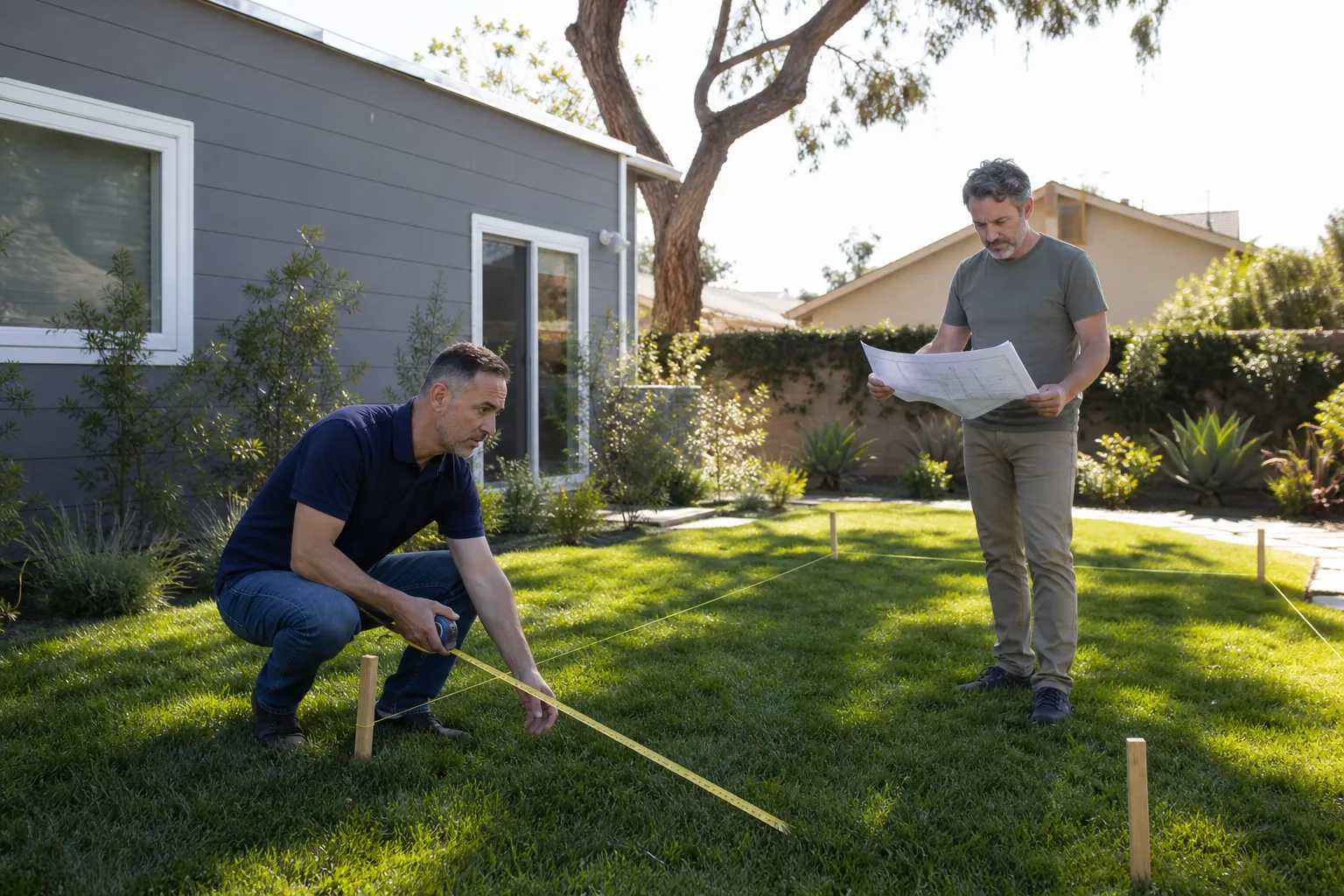
- Site conditions. A flat, accessible backyard in midtown Ventura is not the same job as a sloped lot in the Ventura hills or a property with a century-old oak root system to protect. Slope work alone can add $30,000 to $80,000 in grading, retaining walls, and foundation engineering.
- Foundation type. A slab-on-grade foundation runs $15,000 to $25,000 for an 800-square-foot ADU in Ventura. A raised perimeter foundation or piers on difficult soil can double that before any framing begins.
- Utility distance. If the ADU sits 10 feet from the main sewer line and 20 feet from the electrical panel, connection costs are modest. If the sewer lateral runs under 60 feet of driveway or the panel needs a 200-amp upgrade, expect that line item to jump by $10,000 to $25,000.
- Finish level. Stock cabinets, laminate counters, and a basic electric range put an ADU near the bottom of the per-square-foot range. Custom casework, quartz counters, and a ductless mini-split HVAC system move it toward the top. This is a choice, not a hidden fee.
- Delivery method. Site-built framing in Ventura runs $120 to $180 per square foot for labor and rough materials in 2026. Panelized or modular delivery from a factory can reduce on-site labor but adds freight, crane time, and a general contractor markup to manage the set.
- Design and engineering. A sealed drawing set from a California-licensed architect or engineer runs $8,000 to $18,000. Some design-build firms fold this into the contract. Others list it as a separate pre-construction fee, which means it is real money but sometimes invisible in the initial sales conversation.
When someone quotes you $180 per square foot and someone else quotes $400 per square foot, ask one question: “Which of these six variables does your number include?” The answer will tell you everything.
All-In Cost Categories Most Quotes Omit
A fully-loaded ADU project in Ventura includes line items that never appear on a brochure. Knowing them in advance is the difference between a plan that holds together and a plan that falls apart six weeks before drywall.
- Ventura permit fees. The City of Ventura assesses building permit fees, plan check fees, and impact fees on ADUs. Expect $6,000 to $15,000 depending on project size and scope, though state law prohibits impact fees on ADUs under 750 square feet. A JADU (junior accessory dwelling unit, a conversion within existing walls) carries lower fees but still requires plan review.
- School district fees. Until California law changed the landscape in 2020, school fees on ADUs under 500 square feet were exempt, and many larger ADUs saw fees of $3 to $4 per square foot. Current state law exempts most ADUs, including a 1,000-square-foot ADU, from developer fees. Confirm with your design professional because fee schedules change and some agencies still attempt to assess them.
- Ventura Water (VWUD) connection fees. A new water service or meter upgrade, when required, runs $3,000 to $8,000. If the existing meter serves both the house and the ADU without an upgrade, the cost drops significantly. Sewer lateral work is separate and site-specific.
- SoCal Gas connection fees. Running a gas line to the ADU or upgrading service often runs $1,500 to $4,000. Many 2026 Ventura ADUs go all-electric, which removes this line item but pushes more load onto the electrical panel, sometimes triggering a panel upgrade.
- Site work. Clearing, grading, trenching, and drainage are rarely quoted by prefab brands. On a Ventura lot with clay soil and a winter drainage pattern to manage, site work alone runs $10,000 to $40,000.
- Design and engineering. Architectural drawings, structural calculations, Title 24 energy compliance reports, and sometimes a soils report from a geotechnical engineer total $8,000 to $18,000 before a permit application is filed.
- Project management and general contractor overhead. If you buy a prefab unit directly and hire a separate GC to manage the set, connections, and finish work, the GC’s fee typically adds 10% to 15% of the total build cost. This is the fee that turns a $150,000 factory price into a $220,000 finished ADU.
Cost Benchmarks by ADU Type for 2026
Here are realistic, all-in Ventura numbers as of early 2026. These ranges include permits, design, site work, utilities, construction, and finish materials. They assume a standard finish level: painted drywall, laminate or mid-grade flooring, stock cabinets, and a reasonably level site.
Garage Conversion
$120,000 to $200,000 for a finished 400-to-600-square-foot unit. The structure already exists, so the big costs become insulation, drywall, electrical, plumbing, and fenestration. Ventura garages built before 1980 often need seismic retrofitting, which adds $8,000 to $15,000. The biggest wildcard is the floor: many Ventura garage slabs crack over time, and a full slab replacement adds $20,000 or more.
Attached Addition
$180,000 to $300,000 for a 500-to-800-square-foot ADU sharing a wall with the main house. Sharing infrastructure lowers utility connection costs, but fire-rating the shared wall, matching the existing roofline, and protecting the occupied space during construction push labor costs up. A Ventura homeowner in this scenario will also need to think about whether the addition triggers a property tax reassessment on the main home, though California’s Prop 13 rules generally limit reassessment to the new square footage.
Detached New Construction
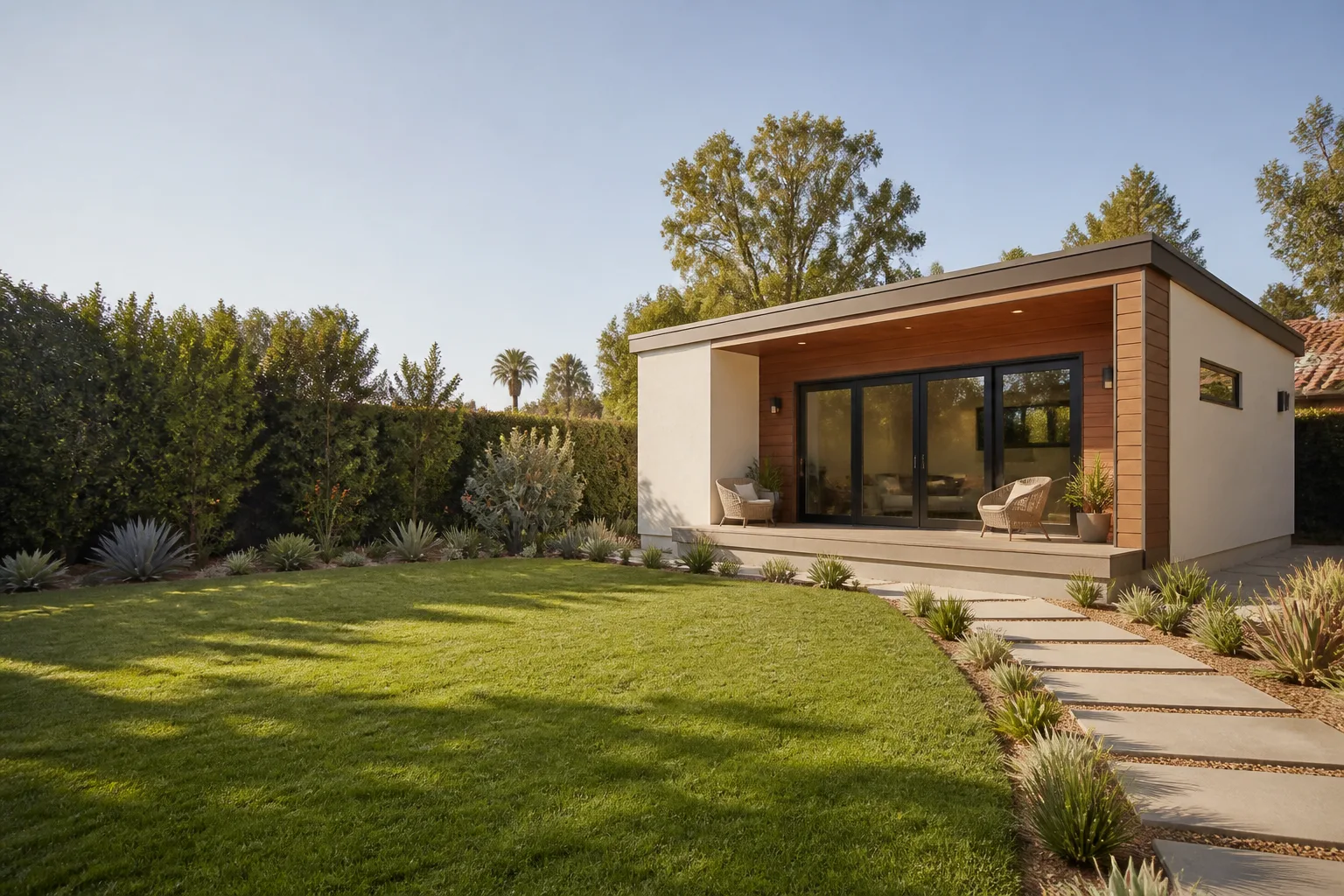
$220,000 to $380,000 for a 750-to-1,000-square-foot standalone ADU with a kitchen, one or two bedrooms, and a bath. This is the most common project type among ADU builders in Ventura, and it carries the fullest set of costs: excavation, new foundation, all-new utilities, and full site construction from the ground up. At the upper end, a 1,200-square-foot two-bedroom ADU with premium finishes and challenging Ventura soil conditions lands between $300,000 and $450,000.
Prefab Delivery-and-Set
$160,000 to $350,000 all-in. The factory price for a 400-to-600-square-foot unit from Boxabl or a similar entry-level prefab manufacturer runs $70,000 to $150,000. Add freight to Ventura, a crane day, foundation, utility connections, permits, and finish subcontractors, and the true finished cost typically doubles the factory price. Premium prefab brands like Dvele and Plant Prefab carry higher factory prices but deliver higher-spec wall systems and finishes, and their finished Ventura projects often land between $300 and $500 per square foot.
For a comparison of how ADUs differ from larger addition projects, see our guide on home addition contractor costs in Ventura. A smaller-scale option is explored in our room addition guide.
Prefab Brand Price Comparison for Ventura Sites
Prefab ADU manufacturers publish base prices that cover factory construction and sometimes delivery. What those prices rarely include on a Ventura site: foundation, crane, utility hookups, permits, engineering stamp, site preparation, and interior finish work beyond the factory spec.
- Boxabl. Published base prices around $60,000 to $100,000 for their signature 20-by-20-foot Casita design. For Ventura buyers, that is the starting line. A finished, permitted, utility-connected Boxabl on a prepared site typically lands between $140,000 and $200,000. The product competes with garage conversions on budget, not with site-built ADUs on flexibility.
- Plant Prefab. A California-based panelized and modular builder with a strong reputation for custom design. Published prices for their smaller ADU lines run $250,000 to $450,000 factory-only, and finished Ventura installations often exceed $500,000. Plant Prefab targets homeowners who want architectural control and are less price-sensitive.
- Dvele. A premium prefab manufacturer out of Northern California whose wall systems and integrated smart-home packages are at the top of the prefab market. Factory pricing for a Dvele ADU often starts at $300,000. Finished in Ventura, a Dvele unit lands between $400,000 and $600,000 depending on site work. That is a real number, and it is why we mention Dvele only when a client explicitly wants a high-spec, low-maintenance enclosure.
- Mighty Buildings. A 3D-printed panel manufacturer with published ADU prices around $180,000 to $350,000 factory-direct. Their Ventura installs are still relatively few, which means permit review can take longer, and not every Ventura contractor is familiar with their structural details. Plan ahead.
The honest takeaway for a Ventura homeowner: published prefab prices are useful for comparing one factory to another, but they are not comparable to an all-in site-built quote unless you add the missing pieces yourself. The safest approach is to ask any prefab manufacturer or their installer for a written breakdown that includes foundation, delivery, set, utilities, permits, and finish. We routinely help Ventura clients evaluate these trade-offs against site-built pricing in the same format.
Financing Cost as a Real Line Item
A $250,000 ADU is not a $250,000 purchase if you borrow the money. The loan type you choose changes the total project cost by $20,000 to $60,000 or more over the life of the loan. Here is how the three main options shake out in 2026.
HELOC (Home Equity Line of Credit)
If you have meaningful equity in your Ventura home, a HELOC is the fastest path to funds. In 2026, HELOC rates in California run roughly 1 to 2 points above the prime rate, often landing in the 7% to 9% range. The interest-only draw period keeps payments low during construction, but total interest paid on a $250,000 HELOC over a typical draw-and-repay cycle can add $40,000 to $70,000 to the true project cost. HELOCs work well for Benson ADU Ventura home readers who already carry significant home equity and can repay quickly.
ADU-Specific Construction Loan
Several California lenders now offer construction loans tailored to ADU projects. These loans finance the build in phases, convert to a permanent mortgage after completion, and underwrite against the projected post-construction value of the property. Rates typically run 8% to 10% in 2026, sometimes higher for borrowers with thinner credit files. The advantage: no large upfront cash outlay and payments that start after the unit is rentable. The disadvantage: total interest cost over 15 to 30 years can exceed the cost of the ADU itself if the unit does not generate the projected rent.
Cash-Out Refinance
If you bought your Ventura home before 2022, you likely hold a mortgage rate in the 2.5% to 4% range. A cash-out refinance in 2026 at 6.5% to 7.5% means re-pricing your entire mortgage, not just the ADU increment. For a $600,000 remaining balance, moving from 3% to 7% adds roughly $18,000 to $25,000 per year in interest on the existing loan. That math rarely works. We tell Ventura clients to model the cash-out refi against a HELOC or standalone ADU loan before deciding, because the refinance line item is the most expensive money in the room.
Smart planning rule: add 20% to 30% of your borrowed amount onto the sticker price of the ADU when you build your own budget. A $250,000 project paid with a 9% HELOC and repaid over 12 years costs roughly $320,000 plus your interest-only draw period. Write that number down before you sign anything.
How to Read a Contractor Quote and Spot Three Red Flags
A written quote should be a full breakdown, not a summary page with a number at the bottom. Here is how to read one, and the three line items most commonly used to win a bid and recover margin later.
- The “allowance gap.” A quote that says “fixtures per builder allowance” is a quote with a hole in it. Allowances are pre-set dollar caps for finish items like tile, faucets, lighting, and cabinet pulls. If the allowance is set at $2 per square foot and you want mid-grade tile that actually costs $8 per square foot, you pay the difference in a change order. Low allowance numbers win bids. Homeowners then discover the real cost at the selection appointment. Always ask: what are the allowance numbers, and are they realistic for the finish level I described?
- The “site conditions to be determined” clause. Any quote that defers site work, grading, foundation design, or utility distances until “after we open the ground” is not a quote. It is an estimate with a variable. In Ventura, where soil conditions range from sandy coastal fill near the beach to dense clay in the foothills, foundation unknowns are real. A written price before work starts means the contractor has done the pre-construction homework, not promised to figure it out later at your expense.
- The “per plan” scope boundary. If the quote covers “construction per approved plans” but the plans have not been engineered yet, the quote is a marketing document. Sealed structural plans can change the foundation design, shear wall requirements, and ceiling assemblies. That changes material quantities. Ask for the price to be re-confirmed in writing after the permit set is stamped, and get that commitment before you sign.
A clean quote names every phase: pre-construction, permits, site work, foundation, framing, mechanical, electrical, plumbing, insulation, drywall, paint, flooring, fixtures, and closeout. It includes a payment schedule tied to milestones, not dates. And it includes a written warranty with a defined remedy period. If a contractor in Ventura will not put those things in writing, get another quote.
Ventura-Specific Costs: Permits, VWUD, SoCal Gas, and Coastal Conditions
Ventura is not a generic California city when it comes to ADU construction. Three local factors shape project cost in ways that a Sacramento or Fresno quote will never reflect.
Coastal Climate and Building Envelope
Homes within a few miles of the Ventura coastline face salt air, marine moisture, and a stronger wetting cycle than inland California structures. That means exterior cladding choices matter. James Hardie fiber cement siding, which carries a 30-year non-prorated warranty, is one of the most common spec choices on our Ventura ADUs specifically because it resists the coastal moisture cycle better than wood lap siding. It costs more than vinyl or basic stucco, typically $2 to $4 more per square foot installed, but it is the right material for a structure expected to last 60 years against an ocean breeze.
Ventura Water Department (VWUD) Requirements
Most ADUs in Ventura tie into the existing water service when the meter has capacity. When the meter does not have capacity, VWUD requires a meter upgrade or a second service. The application, inspection, and connection work typically add $3,000 to $8,000 in hard costs plus two to eight weeks of scheduling time. This is a line item no out-of-area prefab quote will include.
SoCal Gas and All-Electric Decisions
Ventura is part of Southern California Gas Company territory, and new ADUs can connect to gas if service capacity exists. However, California’s Title 24 energy codes increasingly favor all-electric designs, and many Ventura homeowners are choosing heat-pump HVAC and induction cooktops to avoid gas line extension costs entirely. If gas is your preference, the connection line item runs $1,500 to $4,000. If you go all-electric, confirm the existing panel has capacity; a 200-amp panel upgrade runs $3,500 to $6,000 in most Ventura neighborhoods.
Fire Zone Considerations
Portions of the Ventura hills and foothill edges fall within California’s Wildland-Urban Interface (WUI) zones. WUI requirements affect exterior materials, ember-resistant vents, and sometimes landscape clearances. Meeting WUI standards on an ADU typically adds $5,000 to $15,000 compared to a standard coastal build. Check your parcel’s WUI status early through the City of Ventura or a design professional.
Common Mistakes to Avoid
- Comparing factory price to finished price. A $90,000 Boxabl base price and a $250,000 site-built quote are different products. The factory price stops at the factory door. Add site work, foundation, permits, utilities, and finish labor before comparing.
- Ignoring the property tax reassessment. California reassesses the new square footage of an ADU at current market value, not the base-year value of the home. In Ventura, that reassessment typically adds 1% to 1.25% of the ADU’s assessed value to your annual property tax bill. Budget for it.
- Assuming the existing electrical panel has capacity. A 100-amp panel from a 1970s Ventura home will likely need an upgrade to support an ADU with a kitchen and HVAC. That upgrade is rarely in the initial quote.
- Choosing a contractor based on the lowest number without asking what is missing. The lowest quote is often the one with the most deferrals. Ask what allowance assumptions, site conditions, and engineering contingencies are baked in.
- Forgetting the soft costs. Design, engineering, permit fees, and utility connection fees are real costs that run $20,000 to $45,000 on a Ventura ADU. A financing plan based on sticker price alone will fall short.
- Skipping the written warranty conversation. A 365-day warranty means the contractor returns for a full year if something fails. If the warranty is verbal, it does not exist. Get it stamped, dated, and in the contract.
- Planning for “market rent” in year one. Ventura rents are strong, but vacancy, maintenance, and the occasional month-long turnover are real. Underwrite your ADU rental at 85% of market rate for realistic cash flow projections.
When to Call a Professional
Call a professional the moment you have a real property address and a realistic budget number in your head. An experienced ADU contractor in Ventura can tell you in one conversation whether your site will support the size of unit you want, what your utility situation allows, and where the hidden costs will appear. If the property has any slope, any mature tree within the build zone, an older electrical panel, or a sewer lateral that has not been replaced in decades, do not wait until you have bought a prefab unit or signed a lease with a future tenant. The earlier a builder is involved, the fewer surprises the project carries. Benson ADU Ventura offers free estimates in Ventura. Call (350) 207-2506 to schedule a walkthrough and get a written price before any work starts.
Frequently Asked Questions
An all-in ADU in Ventura costs between $180 and $500+ per square foot in 2026, with a garage conversion starting around $120,000 and a premium detached prefab landing above $400,000 depending on size, finishes, and site conditions. The $180-per-square-foot figure assumes a simple slab, standard finishes, and easy utility access; the $500 figure reflects a high-spec prefab from a brand like Dvele or Plant Prefab on a challenging site. Call (350) 207-2506 for an exact quote on your property, and we’ll give you a written price before any work starts.
A garage conversion is the cheapest type of ADU in Ventura, typically running $120,000 to $200,000 all-in because the foundation, walls, and roof already exist. An attached addition is the next most affordable option, followed by a detached new-construction ADU at $220,000 to $380,000. Prefab units from companies like Boxabl can compete with garage conversion pricing on paper, but the finished cost on a Ventura site usually matches a modest site-built ADU once permits, utilities, and finish work are added.
Yes, every ADU in Ventura requires a building permit, and most also require plan check approval, Title 24 energy compliance, and utility connection approvals from VWUD and SoCal Gas when applicable. See ADU Permits, Codes & Inspections in CA: What You Need to Know for a full breakdown. Permit fees and plan check fees for a Ventura ADU typically run $6,000 to $15,000. Working without a permit creates liability, delays any future sale, and can result in a stop-work order and fines.
Yes, building an ADU in Ventura triggers a property reassessment on the new square footage only, not the original home’s base-year value. In practice, an ADU that is assessed at $250,000 will add roughly $2,500 to $3,100 per year to your property tax bill in Ventura County. The main home’s Prop 13 base-year assessment remains unchanged, but many homeowners are surprised by the ADU’s incremental tax line item and should build it into the rental or housing budget.
Plan on 10 to 16 months from first design meeting to final inspection for a site-built ADU in Ventura, with six to ten of those months spent in construction. Prefab units can shorten on-site construction to four to eight months once permits are issued, but the pre-construction design and permit phase still runs three to six months. Any contractor who promises a fully permitted, built, and occupied ADU in under six months is describing a garage conversion on a very cooperative site, not a typical detached project.
Yes, Ventura property owners can build an ADU specifically to generate rental income, and many do, with finished one-bedroom units renting for $2,000 to $2,800 per month depending on location, finish level, and proximity to the coast. Keep in mind that city ordinance may require an owner occupancy on the property in some configurations, and California law creates an ADU amnesty pathway for unpermitted structures that meet health and safety standards. For a written price on a rental-ready ADU, call (350) 207-2506 and we’ll walk your property with you.
The Bottom Line
A Ventura ADU is a six-figure investment, and the only way to protect it is to demand a written breakdown that accounts for all six cost variables: site conditions, foundation type, utility distance, finish level, delivery method, and design engineering. The true all-in price for 2026 sits between $180 and $500 per square foot, and the difference between a comfortable project and a budget spiral is the pre-construction homework done before the contract is signed. Know your soft costs, know your financing line item, and know exactly what the warranty covers. Then build with confidence. For a free, no-hassle estimate in Ventura, call Benson ADU Ventura at (350) 207-2506 or reach out through our Benson ADU Ventura home page. We answer with a live person every time, and we put every price in writing before any work starts.
Written by Troy Eastman, Owner at Benson ADU Ventura, serving Ventura since 2006. Browse more guides & resources on ADU planning and construction.