Last updated October 15, 2026
The Complete Guide to ADU in Ventura
Most Ventura homeowners who call a contractor first are already six months behind. The lot analysis, financing, and permit pathway should happen before anyone picks a floor plan. Here’s the counterintuitive part: a beautifully designed ADU on a lot that can’t legally hold it is a very expensive piece of wall art. This guide walks the decision tree in order – coastal zone rules, setback math, unit type economics – so you don’t spend $12,000 on plans for a unit your property can’t permit. We’re writing this from Ventura, for Ventura homeowners, because our city plays by rules that Sacramento never sees.
Quick Answer
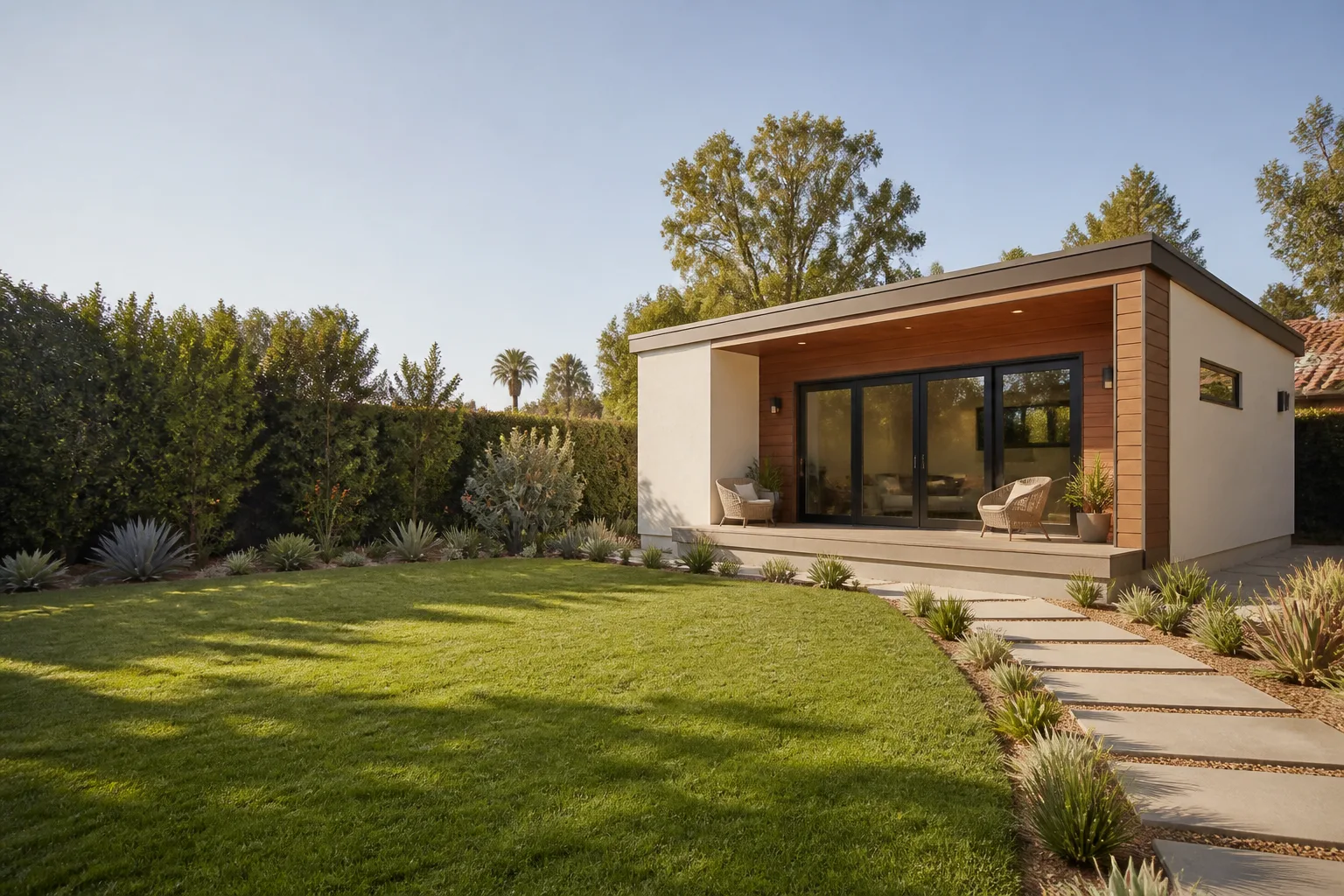
An ADU in Ventura is a self-contained secondary dwelling unit (kitchen, bathroom, sleeping area) built on a single-family residential lot, and under current California state law plus Ventura’s local coastal program, most single-family lots can legally add at least one. Expect to spend $180,000 to $420,000 for a site-built unit and $130,000 to $280,000 for a prefab unit, with Ventura permitting adding 4 to 8 months before construction starts. The three decisions that determine everything else: your coastal zone designation, your lot’s setback envelope, and whether you’re building for family, rent, or a workspace.
Table of Contents
- Ventura ADU Rules: What Actually Applies to Your Lot
- Setback Math: The Numbers That Kill Projects
- Stick-Built vs. Prefab ADU in Ventura: Real Timelines and Real Costs
- Coastal Proximity: Foundation Requirements and Material Choices
- Ventura ADU Rent Comps and Payback Math for 2025-2026
- The Exact Sequence: Lot Analysis to Build (And Why Skipping Steps Costs Money)
- Financing an ADU in Ventura: What Lenders Actually Want
- JADU vs. ADU: Which One Pencils Out in Ventura
Ventura ADU Rules: What Actually Applies to Your Lot
California state law (AB 68, AB 881, SB 13) says every city must allow at least one ADU on any single-family lot. But Ventura sits inside a designated coastal zone, which means the California Coastal Act layers on top of local zoning. In practice, that means your ADU application may trigger a coastal development permit review, even if the state ADU law would otherwise wave it through by right. We’ve seen applications stall because a homeowner assumed state law preempted everything. It does not.
Here’s what you need to know before you sketch anything:
- Zoning district matters first. Single-family zones (R-1, R-2 in older Ventura neighborhoods) have different ADU allowances than multifamily zones. Your property’s zone determines maximum unit size, height limits, and whether a detached unit is even possible.
- Coastal zone overlay. A significant portion of Ventura – essentially everything west of Victoria Avenue and south of the 101 in the lowlands – falls within the coastal zone. In this area, ADU permits require a coastal development permit, adding complexity and time.
- State exemptions help, but don’t eliminate review. State law forbids cities from requiring owner-occupancy for ADUs built after 2020 and caps many fees. But Ventura’s coastal overlay means you can’t simply self-certify. A planner reviews your project against the Local Coastal Program.
- Historic districts add another layer. If your home sits in a designated historic district (parts of Midtown and downtown Ventura near Ventura Avenue), your ADU design must go through design review. A prefab unit that would fly in East Ventura may get flagged in a historic district for rooflines and materials.
The takeaway: run a preliminary lot check before you hire a designer. You can call the Ventura planning counter, or work with a builder who does this analysis as step one. If you’re starting from scratch, our Benson ADU Ventura home page walks through how we approach this at no charge.
Setback Math: The Numbers That Kill Projects
Setbacks are the invisible fence around your property. In Ventura, they’re measured from your property lines to any structure, and they get complicated fast when you add an ADU to an already-built lot. State law caps ADU side and rear setbacks at 4 feet, but Ventura’s coastal overlay and hillside regulations can enforce stricter limits in specific neighborhoods.
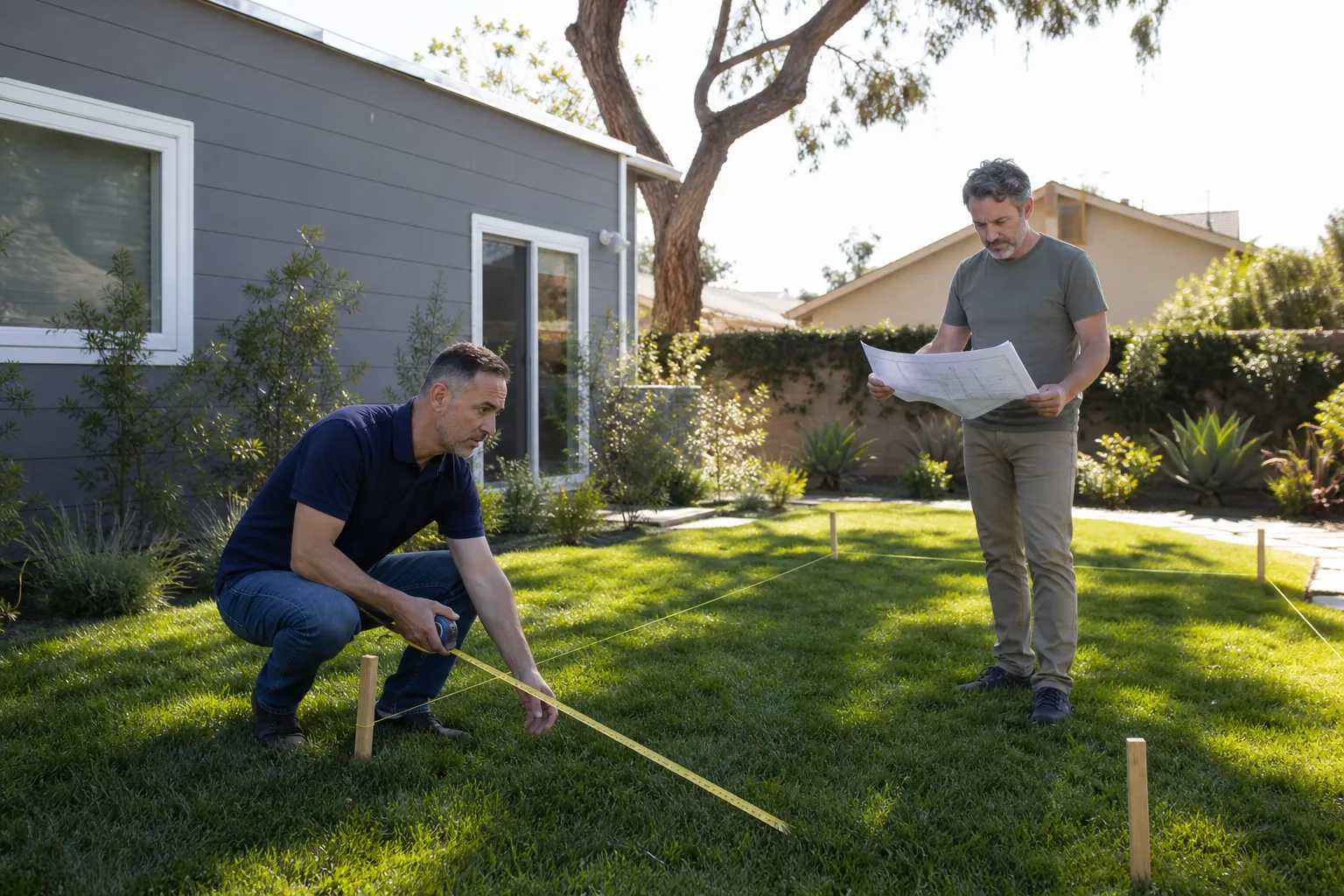
Here’s the math that surprises first-timers. A typical Ventura lot is 50 feet wide by 100 feet deep. Your main house might sit 20 feet from the front property line, leaving roughly 70 feet of depth in the back. A detached ADU with a 4-foot rear setback and a 4-foot side setback eats up roughly 20 to 25 feet of that depth, depending on width. On many lots, that means your ADU footprint realistically caps around 400 to 600 square feet – not the 800 to 1,000 square feet you may have seen advertised.
Key setback rules to understand before buying plans:
- Front yard setbacks apply to ADUs in Ventura. Unlike some cities, Ventura’s zoning typically requires ADUs (even detached ones) to respect front yard setback rules if the ADU is placed forward of the main house. This catches people who plan a “granny flat” in the front yard near the sidewalk.
- Side and rear setbacks. State law sets a 4-foot minimum for side and rear setbacks on ADUs, but Ventura’s coastal commission has held this to 5 feet in certain coastal zone neighborhoods with high fire severity ratings.
- Height limits. Detached ADUs generally cap at 16 feet in Ventura (one story plus a low-pitch roof), but 18 feet is permitted if your lot slopes and the unit sits at the rear. Attached ADUs and JADUs follow the main house’s height envelope.
- Lot coverage ratio. This is the silent killer. Ventura zones cap total lot coverage (all structures combined, including your house, garage, and ADU) at 40 to 50 percent depending on zone. On a 5,000-square-foot lot, that’s 2,000 to 2,500 square feet of total footprint. If your house already occupies 1,800 square feet and your garage 400, you may have 200 square feet left. No ADU fits. This is the single most common reason ADU plans get scrapped.
Before you spend a dollar on design, pull your property’s zoning summary and run the setback and coverage math. If that feels overwhelming, a contractor who does this as part of a free site assessment is worth their weight. Our ADU Builders in Ventura page covers how we approach this analysis step by step.
Stick-Built vs. Prefab ADU in Ventura: Real Timelines and Real Costs
There are two ways to build an ADU in Ventura: stick-built (framed on site, stud by stud) or prefab (manufactured in a factory and delivered as panels or modules). If you’re unsure which route fits your budget and timeline, our DIY vs Professional ADU: The Ventura Homeowner’s Decision Guide breaks down the tradeoffs. Both produce a legal, habitable unit. The tradeoff is time versus customization, plus cost reliability.
Stick-Built ADU
A stick-built ADU gives you full design freedom. You want a specific roofline, window placement, or an unusual footprint? A framer can build it. The tradeoff is time. A site-built ADU in Ventura typically runs 8 to 14 months from groundbreaking to occupancy, depending on permit queue, weather delays (winter rains in Ventura slow exterior work), and labor availability. Ventura’s coastal zone can add permit review weeks that don’t exist inland.
- Typical cost range in Ventura (2025-2026): $180,000 to $420,000 depending on size, finishes, and site conditions.
- Cost per square foot: $350 to $550 for a typical one-bedroom unit. Higher for small units (economies of scale work against you under 500 square feet) and for hillside lots requiring additional foundation work.
- Timeline: 4 to 8 months for design and permits, then 6 to 10 months for construction. Total: 10 to 18 months.
Prefab ADU
Prefab units from brands like Abodu, Cover, and Dvele are manufactured in a factory, then shipped to your Ventura lot and placed with a crane. The brand handles their own engineering, and their units meet California building codes by default. This cuts design time dramatically and removes weather as a construction variable.
We build with several leading prefab lines because they solve two real Ventura problems: permit consistency (the brands have pre-approved plans many jurisdictions accept) and construction schedule compression (a Mighty Buildings or Boxabl unit can be placed and weather-tight in under a week). What you give up is full customization. You’re choosing from the brand’s model lineup, not drawing a one-off.
- Typical cost range in Ventura (2025-2026): $130,000 to $280,000 all-in, including site work, foundation, utility connections, and the unit itself.
- Cost per square foot: $300 to $475 depending on brand and model. Prefab pricing is usually more fixed than site-built because the factory sets a hard number on the unit.
- Timeline: 2 to 4 months for design and permits (brand-specific plans help), then 2 to 5 months for site work and installation. Total: 4 to 9 months.
Side-by-Side Comparison
| Factor | Stick-Built | Prefab |
|---|---|---|
| Design flexibility | Unlimited | Brand model lineup only |
| Total timeline | 10-18 months | 4-9 months |
| Cost range (1-bed, 400-600 sf) | $180K-$320K | $130K-$240K |
| Cost certainty | Varies with lumber and labor | Factory-locked unit price |
| Best for | Unusual lots or custom designs | Standard lots, tight timelines |
For a deeper comparison of unit types and brand-specific details, see our Home Addition Contractor in Ventura page, which includes the same decision framework for larger additions.
Coastal Proximity: Foundation Requirements and Material Choices
Ventura’s position on the Pacific shapes ADU construction in ways inland builders never think about. Salt air corrodes. Fog sits heavy in the mornings between November and June. And built near the beach, the soil can shift. These factors dictate foundation design and material specifications.
The first question: how close are you to the coast? Homes west of the 101 and south of Main Street sit on sandy, well-drained soil that moves with moisture. Homes in the foothills east of Victoria sit on clay that expands and contracts with seasonal rain. Neither is a dealbreaker, but both affect your foundation plan.
- Sandy coastal soils typically require a deeper, more reinforced concrete slab. Plan for an additional $8,000 to $20,000 over a standard slab depending on your lot’s specific soils report.
- Expansive clay soils in the foothills often need a post-tensioned slab or a raised pier foundation. This can add $12,000 to $25,000.
- Elevation matters. Ventura’s FEMA flood maps show flood zones in low-lying areas near the Ventura River and the harbor. If your lot sits in a designated flood zone, your ADU floor must be elevated above base flood elevation. This changes foundation costs and design.
Material choices follow from the coastal environment. Exterior cladding must withstand salt air and persistent moisture. We recommend James Hardie fiber cement siding and trim on coastal zone ADUs because it resists salt corrosion and won’t warp like wood. Window flashing and hardware should be marine-grade stainless or aluminum. Standard galvanized fasteners rust within a decade near the coast. When you’re pricing your unit, don’t spec builder-basic materials and expect them to last near the ocean.
The good news: Dvele and Cover prefab units ship with moisture-managed wall assemblies and exterior cladding rated for coastal conditions, so if you’re in the coastal zone, a well-designed prefab may handle the environment better than a stick-built unit with lower-grade materials.
Ventura ADU Rent Comps and Payback Math for 2025-2026
If you’re building for rental income, the math matters before you spend a dollar. Here are realistic rent comps for Ventura ADUs as of 2025-2026, based on units currently advertised and our own completed projects:
- Studio ADU (350-450 sf): $1,600 to $1,950 per month in Midtown and downtown Ventura; $1,400 to $1,700 east of Victoria.
- One-bedroom ADU (500-650 sf): $2,100 to $2,600 per month in the coastal zone; $1,800 to $2,200 in East Ventura.
- Two-bedroom ADU (700-850 sf): $2,600 to $3,200 per month in desirable neighborhoods near downtown and the beach; $2,200 to $2,700 further inland.
Rents climb with proximity to the water, walkability, and private outdoor space. A one-bedroom ADU with its own small yard off Ventura Avenue rents faster and for more than a two-bedroom with no outdoor area in the foothills.
Payback period calculation, using a one-bedroom prefab unit at $220,000 all-in:
- Gross annual rent: $2,200 per month × 12 = $26,400.
- Operating costs (property tax increase, insurance, maintenance, vacancy buffer): roughly $6,000 to $8,000 per year.
- Net annual income: $18,400 to $20,400.
- Payback period: $220,000 ÷ $19,000 net ≈ 11.5 years. At current Ventura rent growth (4-6% per year), that shortens to roughly 9 to 10 years.
If you build for family instead of rent, the math is different. The “payback” is avoiding a separate housing payment for a parent or adult child, which in Ventura means avoiding $1,800 to $2,600 per month in rent elsewhere. Over five years, that’s $108,000 to $156,000 in avoided rent. The unit also adds resale value. Appraisers in Ventura typically add $75,000 to $150,000 of value for a legal ADU, though coastal zone comps vary.
One more consideration: Ventura’s rent control ordinance (Measure O, passed 2024) applies to certain multifamily properties. Most single-family ADUs are exempt, but if your property falls under rent control, your ADU rent may be capped. Check with a local property attorney before you bank on top-of-market rents.
The Exact Sequence: Lot Analysis to Build (And Why Skipping Steps Costs Money)
Here’s the order that works, based on our experience with dozens of ADU projects in Ventura. Skip a step and you’ll pay for it later, usually twice.
- Lot analysis (1-2 weeks, often free). Check zoning, coastal overlay, setback envelope, lot coverage ratio, existing utility locations, and soil type. This tells you if an ADU is feasible and roughly what size.
- Financing (2-4 weeks, parallel with step 1). Know your budget before you design. Cash-out refinance? HELOC? ADU-specific construction loan? See the financing section below.
- Design and unit selection (4-8 weeks). Choose stick-built with a designer, or select a prefab model. Get engineering drawings, not just renderings.
- Permitting (4-8 months in Ventura). Submit to the city. Coastal zone adds review time. Respond to plan check comments. This is where projects stall – budget for it.
- Construction (2-6 months for prefab, 6-10 months for stick-built). Site prep, foundation, placement or framing, utilities, finishes, inspections.
- Final inspection and occupancy (1-3 weeks). Once Ventura issues a certificate of occupancy, you can legally rent or occupy.
The most expensive mistake we see: homeowners design first, run out of budget, and then redesign. A $12,000 design package is wasted if the lot analysis never happened. The second most expensive mistake: assuming Ventura permits move at state-mandated speed. The state says ADU permits must be reviewed within 60 days, but Ventura’s coastal overlay and staffing realities mean 4 to 6 months is more realistic. Plan for it.
Financing an ADU in Ventura: What Lenders Actually Want
Most homeowners finance their ADU through one of four routes. Each has different requirements, and Ventura’s coastal property values shape what you can access.
Cash-out refinance. If you have equity and a low current rate, run the numbers carefully. Refinancing into 2025-2026 rates may cost more in interest than the ADU earns in rent. But it’s the simplest path: one loan, one payment.
HELOC (home equity line of credit). A HELOC keeps your first mortgage intact and lets you draw funds as construction bills arrive. Rates are variable and currently sit 1 to 2 points above primary mortgage rates. For a $200,000 ADU, that’s a meaningful monthly cost.
ADU construction loan. These loans lend against the future value of your property after the ADU is complete. Lenders look at your projected rental income (you’ll need comps – see the section above) and your debt-to-income ratio. In Ventura, where post-ADU property values are strong, these loans are increasingly common. Expect 12 to 18 months interest-only during construction.
Cash. If you have it, use it. No loan fees, no interest, and your payback period is pure rent math.
One thing every lender wants: a fixed-price contract. A written price before work starts, no open-ended change orders, and a builder with a documented history. Lenders in Ventura have tightened requirements after years of cost overruns on construction projects. If your contractor can’t provide a written, fixed price, you’ll struggle to close any construction loan.
For specifics on how we structure fixed pricing and handle financing timelines, see our Room Addition Contractor in Ventura page, which walks through the same process for smaller additions.
JADU vs. ADU: Which One Pencils Out in Ventura
A JADU (junior accessory dwelling unit) is a small unit created from existing space inside your house – often a converted bedroom, a basement, or a sectioned-off portion of the home. It has its own entrance, a kitchenette (not a full kitchen – a JADU’s kitchen typically caps at 1,000 square feet and is limited to a sink and small cooking appliance), and can share a bathroom with the main house. An ADU is a separate, fully independent unit with a full kitchen and bathroom.
JADUs are dramatically cheaper because you’re not building a new structure. Converting a bedroom into a legal JADU in Ventura typically runs $40,000 to $90,000, versus $130,000+ for a new ADU. Permitting is also simpler – no coastal zone foundation review, no new utility connections (in most cases), and Ventura processes JADU permits faster than full ADU permits.
The tradeoffs:
- Size limits. JADUs cap at 500 square feet in California. Fine for one person, tight for a couple.
- Owner-occupancy. State law historically allowed cities to require owner-occupancy on the property for JADUs. While many cities dropped this, check Ventura’s current code before assuming.
- Shared utilities. A JADU typically shares water, sewer, and sometimes electrical service with the main house. You save connection costs but lose the ability to separately meter the unit for rental billing.
- Rent ceiling. JADUs rent for less than full ADUs. In Ventura, a legal JADU near downtown rents for $1,300 to $1,700 versus $2,100+ for a separate ADU.
Our take: if you’re housing a family member, a JADU is usually the better financial choice. If you’re building for rental income, a detached ADU generates substantially more rent and adds more resale value. On lots where a detached ADU won’t fit (coverage ratio kills it), a JADU can be the only option – and it’s a good one.
Common Mistakes to Avoid
- Designing before the lot analysis. Buying plans before you know your setback envelope, lot coverage ratio, and coastal zone status is like buying furniture for a house you don’t own yet. Ventura’s coastal overlay makes this especially risky.
- Underestimating Ventura’s permit timeline. State law says 60 days, Ventura reality says 4 to 8 months. Budget time as aggressively as you budget money.
- Forgetting the coastal development permit. If your property falls in the coastal zone and you skip this in your planning, your project stalls at intake. A simple zoning check catches this in minutes.
- Cheaping out on coastal-rated materials. Standard galvanized fasteners and builder-basic siding fail near the ocean. Spend the extra $5,000 to $15,000 on marine-grade hardware and fiber cement cladding.
- Assuming rent comps from other cities apply. Ventura rents are strong, but they vary by neighborhood. A unit east of Victoria rents for 20-30% less than a comparable unit near downtown. Run your payback math with comps from your specific area.
- Hiring a contractor without a written fixed price. A verbal estimate that “might go up once we open the walls” is not a price. Get it in writing before any work starts.
When to Call a Professional
If your lot sits in the Ventura coastal zone, on a hillside, or near a flood zone, call a professional before you do anything else. The same applies if your lot coverage math is tight – a builder who does lot analysis daily can tell you in an hour whether an ADU fits, what size, and where. If you’re weighing stick-built versus prefab and don’t know which brands match your budget, a contractor who builds with multiple lines can show you real options with real prices, not a single take-it-or-leave-it product. Benson ADU Ventura offers free estimates in Ventura – call (350) 207-2506 for a lot analysis and written pricing.
Frequently Asked Questions
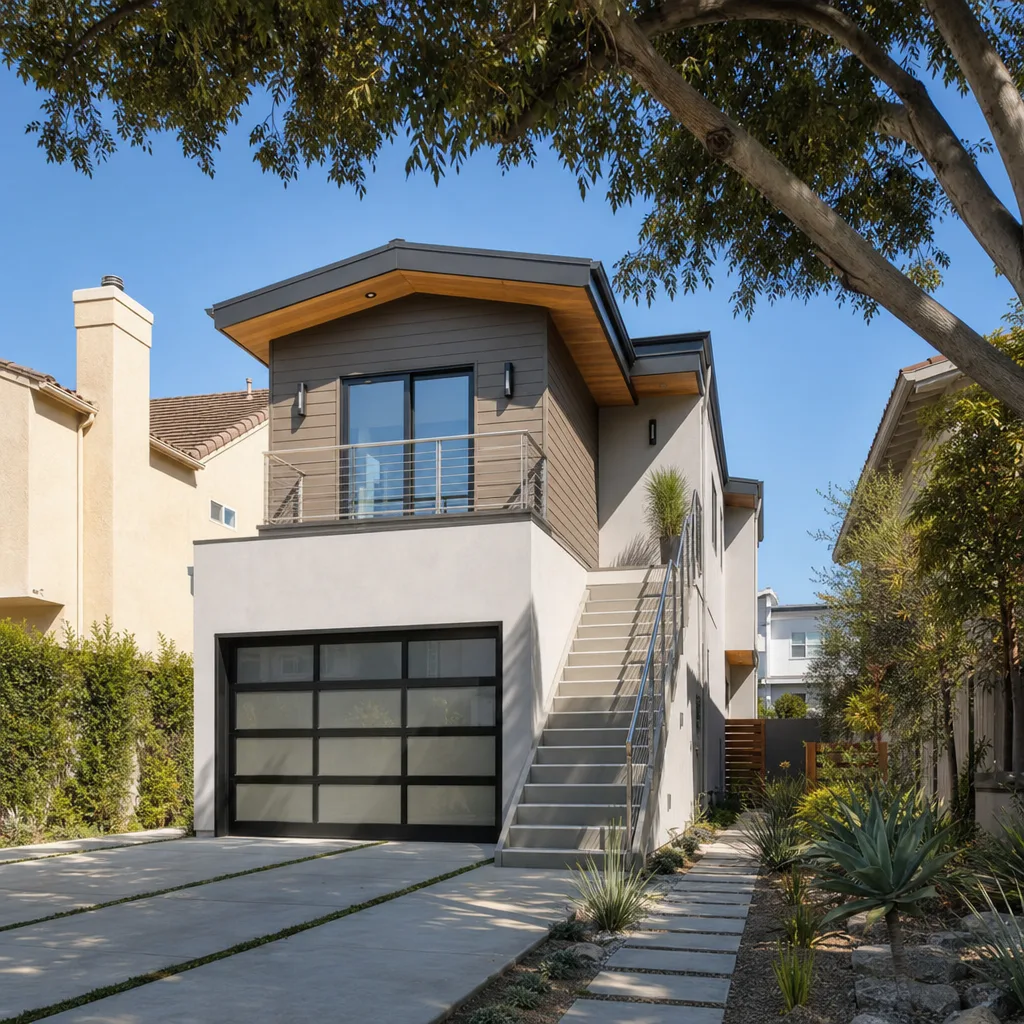
A legal ADU in Ventura typically costs $180,000 to $420,000 for a site-built unit and $130,000 to $280,000 for a prefab unit, all-in with permits, foundation, utilities, and finishes. Your final number depends on unit size, coastal zone requirements, soil conditions, and material choices. Call (350) 207-2506 for a written quote specific to your lot.
Expect 4 to 8 months for ADU permit approval in Ventura, with coastal zone properties trending toward the longer end. State law requires cities to review within 60 days, but Ventura’s coastal overlay and current staffing levels mean real review times run longer. Plan your financing and construction schedule around this reality.
Yes, most single-family ADUs in Ventura can be legally rented, and as of 2025-2026, a one-bedroom unit near downtown commands $2,100 to $2,600 per month. Rent control rules may apply to certain multifamily properties, but single-family ADUs are generally exempt. Check with a local property attorney for your specific situation.
An ADU is a fully independent unit with its own kitchen and bathroom, while a JADU is a smaller unit (under 500 square feet) created from space inside your existing home, often sharing utilities. In Ventura, a new ADU runs $130,000+, while a JADU conversion typically costs $40,000 to $90,000.
If your property falls within Ventura’s coastal zone (generally west of Victoria Avenue and south of the 101 in lowland areas), yes, your ADU will require a coastal development permit in addition to standard building permits. This adds review time and may limit certain design choices. A lot analysis confirms this before you spend on design.
Yes. Benson ADU Ventura provides a written price before any work begins, backed by the 365-Day Done Right Promise and a written guarantee on every project. We build with leading prefab brands including Abodu, Cover, Dvele, and Mighty Buildings, and homeowners always receive fixed pricing with no surprise change orders. Call (350) 207-2506 for a free estimate.
The Bottom Line
Building an ADU in Ventura is a three-part decision: understand your lot’s legal envelope, choose the right unit type for your goal, and lock in financing before you design. Ventura adds complexity that inland cities don’t have – coastal zone permits, salt air material demands, and lot coverage ratios that kill projects early. But the payoff is real: strong rents, meaningful property value gains, and housing for family without a second mortgage. Start with the lot analysis, get a written price, and don’t design until you know your envelope. For more guides & resources on Ventura ADU projects, explore our blog. Do that, and the rest of the decisions fall into place.
Ready to check your lot? Call Benson ADU Ventura at (350) 207-2506. We’ll run the zoning, coastal, and setback math, show you real unit options from brands you can research yourself, and give you a written price before anything is signed.
Written by Troy Eastman, Owner at Benson ADU Ventura, serving Ventura since 2006.