Last updated October 15, 2026
ADU Permits, Codes & Inspections in CA: What You Need to Know
AB 2221 and SB 897 were celebrated as permit killers, but they didn’t eliminate Ventura’s fire sprinkler trigger for ADUs over 750 square feet. That single line item adds $8,000 to $14,000 and surprises most first-time ADU owners who assumed “by-right” meant “no extra costs.” In this guide and our The Complete Guide to ADU in Ventura, we’ll walk through what California state law actually preempts, what Ventura can still legally require, how long plan check really takes, what inspectors actually fail, and the hidden costs that don’t show up on any city fee schedule.
Quick Answer
California ADU law (AB 68, AB 881, SB 13, AB 2221, SB 897) strips most local barriers: cities can’t require minimum lot sizes, owner-occupancy, or replacement parking for most ADUs, and they must approve or deny a complete application within 60 days. But Ventura still legally enforces fire sprinklers for ADUs over 750 sq ft, Title 24 energy compliance (including HERS ratings), and coastal zone overlays that can add $15,000 to $30,000 in hidden costs. Plan check in Ventura currently runs 6 to 10 weeks, not the 60-day statutory maximum, because the clock only starts once the application is deemed complete.
Table of Contents
- What State Law Preempts vs. What Ventura Can Still Require
- The Hidden Cost Triggers: Fire Sprinklers, Title 24, and Coastal Overlays
- The Ventura Plan Check Timeline: Realistic Stage Durations
- The Four Inspection Stages Every Ventura ADU Must Pass
- Owner-Builder Permit Risks in California
- How Prefab ADUs Change the Permitting Math
- Common Mistakes to Avoid
- When to Call a Professional
- Frequently Asked Questions
What State Law Preempts vs. What Ventura Can Still Require
California’s ADU reforms from 2020 through 2024 created one of the most permissive accessory dwelling unit frameworks in the country. The state removed local control over most of the levers cities historically used to slow or block ADUs. Here’s the line: if the state says a city “shall not” do something, that city has no discretion. If the state says a city “may” do something, Ventura has room to act.
What California preempts outright:
- Minimum lot size. No city can require a minimum lot size for an ADU. A 4,000-square-foot lot has the same ADU rights as a 10,000-square-foot lot.
- Owner-occupancy. Cities cannot require the owner to live on the property, either in the main house or the ADU. Rental-only properties qualify.
- Replacement parking. If you convert a garage or carport to an ADU, no city can force you to build replacement parking elsewhere on the lot.
- Minimum ADU size. Cities cannot impose a minimum size beyond what’s needed for a habitable dwelling (typically 150 sq ft for an efficiency unit).
- Setbacks for conversions. ADUs created within an existing structure (garage conversions, basement conversions) must be approved with setbacks no greater than 4 feet from side and rear property lines.
- Impact fees. ADUs under 750 sq ft are exempt from impact fees. ADUs 750 sq ft and larger pay fees calculated proportionally to the square footage ratio of the ADU to the primary dwelling.
- 60-day approval clock. A city must approve or deny a complete application within 60 days. No continuances, no open-ended “we’re still reviewing.”
- Parking requirements. For ADUs within a half-mile of public transit or in a historic district, no parking can be required. For all other ADUs, parking requirements max out at one space, which can be satisfied with tandem parking or a driveway.
What Ventura can still legally require:
- Fire sprinklers. This is the big one. Ventura follows California Fire Code, which requires automatic fire sprinklers in all new residential construction, including ADUs. The 750 sq ft threshold comes from state building code: ADUs under 750 sq ft are exempt from the sprinkler requirement when the primary dwelling also lacks sprinklers. Above 750 sq ft, sprinklers are mandatory, no exceptions.
- Title 24 energy compliance. Ventura enforces California’s energy code strictly. Your ADU needs a HERS (Home Energy Rating System) verification, which means a third-party HERS rater must inspect and certify insulation, HVAC, lighting, and fenestration. This is not optional and it’s not waived for ADUs.
- Coastal zone overlay. If your property falls within Ventura’s coastal zone (roughly everything west of the 101 along the oceanfront and much of the hillside areas east of downtown), you need a coastal development permit on top of the standard building permit. The coastal permit triggers additional review by the California Coastal Commission if the city’s local coastal program doesn’t already delegate authority.
- Setbacks for new detached construction. For a new detached ADU (not a conversion), Ventura can still enforce standard setback requirements: typically 4 feet from side and rear property lines, but the city can require more in hillside or fire hazard zones.
- Height limits. State law sets a 16-foot maximum for detached ADUs on lots with an existing single-family home, but Ventura can reduce this to 16 feet or allow up to 18 feet if the ADU is within a half-mile of transit or matches the primary dwelling’s height. Ventura’s municipal code currently allows 16 feet for most detached ADUs.
- Design review. Ventura can require design review for detached ADUs to ensure compatibility with the neighborhood. However, the review must be objective and cannot delay the 60-day clock once the application is complete.
In our experience, the biggest point of confusion is the fire sprinkler threshold. Homeowners read the state law summary and see “by-right” and “ministerial approval,” then discover at plan check that a 800-square-foot two-bedroom ADU triggers a fire sprinkler system they never budgeted for. If you’re planning an ADU in Ventura, the 750-square-foot line is the most important number on your floor plan; see ADU Warning Signs: A Ventura Homeowner’s Reference Guide for other common triggers.
The Hidden Cost Triggers: Fire Sprinklers, Title 24, and Coastal Overlays
Ventura ADU permit fees themselves are not the expensive part. The city’s building permit and plan check fees for a typical 800-square-foot ADU run $8,000 to $12,000. The hidden costs come from code triggers that most homeowners don’t discover until the plan reviewer’s comments come back.
Fire sprinklers: the $8,000 to $14,000 surprise
If your ADU exceeds 750 square feet, California Residential Code requires automatic fire sprinklers throughout the unit. This means running a dedicated sprinkler line from your main water service, installing sprinkler heads in every room, and often upgrading your water meter or adding a pressure booster if the existing service can’t handle the additional flow demand. In Ventura, a typical fire sprinkler system for a two-bedroom ADU runs $8,000 to $14,000, depending on whether your water service needs an upgrade and how far the ADU sits from the main line.
This is not a cost you can avoid by building differently. It’s triggered by square footage alone. If you’re on a budget, staying at 749 square feet or below (a generous one-bedroom or a compact two-bedroom) avoids the requirement entirely, assuming your primary home doesn’t already have sprinklers.
Title 24 energy compliance: the HERS rater line item
Every new ADU in California must meet Title 24 energy code, which requires third-party HERS verification. The HERS rater inspects the insulation installation (Grade 1 installation), verifies the HVAC system’s refrigerant charge and airflow, checks duct leakage (if you have ducts), and confirms lighting and window performance. The HERS rater’s fee runs $800 to $1,500 for an ADU, but the compliance requirements also drive material choices. Expect to pay more for insulation, windows with a lower U-factor, and a high-efficiency mini-split or heat pump system. In the Ventura climate (mild coastal, but with inland heat pockets in the eastern parts of the city), a ductless mini-split typically satisfies the code most cost-effectively.
Coastal zone overage: the permit you didn’t know you needed
Properties within Ventura’s coastal zone require a coastal development permit (CDP) before or alongside the building permit. The coastal zone in Ventura extends roughly from the shoreline inland to the first major ridgeline, covering much of the downtown area, the Avenue district, and the hillside neighborhoods above Ventura College. A CDP adds a separate review track with its own application, its own fees ($3,000 to $7,000 depending on the project), and its own timeline. The California Coastal Commission or the city (under a delegated local coastal program) reviews the project for visual impact, public access, and environmental sensitivity. In some coastal zone areas, the ADU’s height, exterior materials, and window placement can be modified as conditions of approval.
Other hidden costs builders should flag upfront:
- School impact fees. Exempt for ADUs under 750 sq ft, but ADUs 750 sq ft and larger pay a proportional share. In Ventura Unified School District, this typically runs $5,000 to $8,000 for a two-bedroom ADU.
- Sewer and water connection fees. Ventura Water charges connection fees for new dwelling units, typically $4,000 to $6,000 depending on meter size and ADU square footage.
- Utility trenching. If your ADU sits more than 50 feet from the existing water, sewer, and electrical service points, trenching costs add $3,000 to $8,000 depending on depth, soil conditions, and whether you’re crossing hardscape.
- Plan check resubmission fees. Ventura charges for each resubmission after the first two reviews. A clean plan set from a builder who knows the local code avoids $500 to $1,500 in resubmission fees.
The Ventura Plan Check Timeline: Realistic Stage Durations
California law says a city must approve or deny a complete ADU application within 60 days. In practice, Ventura’s plan check currently runs 6 to 10 weeks from application submission to permit issuance for a straightforward detached ADU. The 60-day clock doesn’t start when you submit the application; it starts when the city deems the application complete. Getting to “complete” typically takes 2 to 3 weeks of back-and-forth as the plan reviewer checks for missing sheets, incomplete details, and code conflicts.
Here’s the realistic timeline we’ve seen across recent Ventura ADU projects:
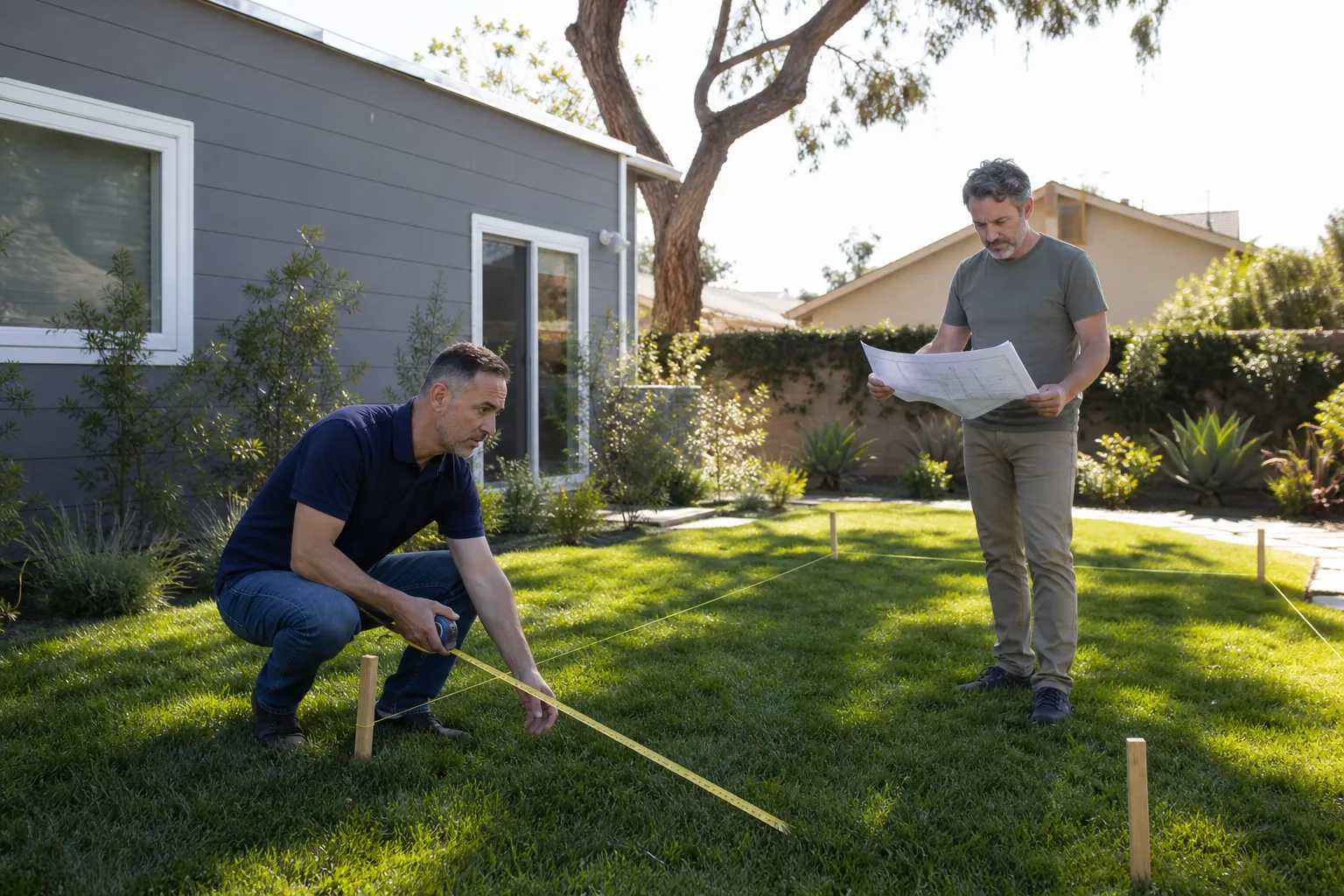
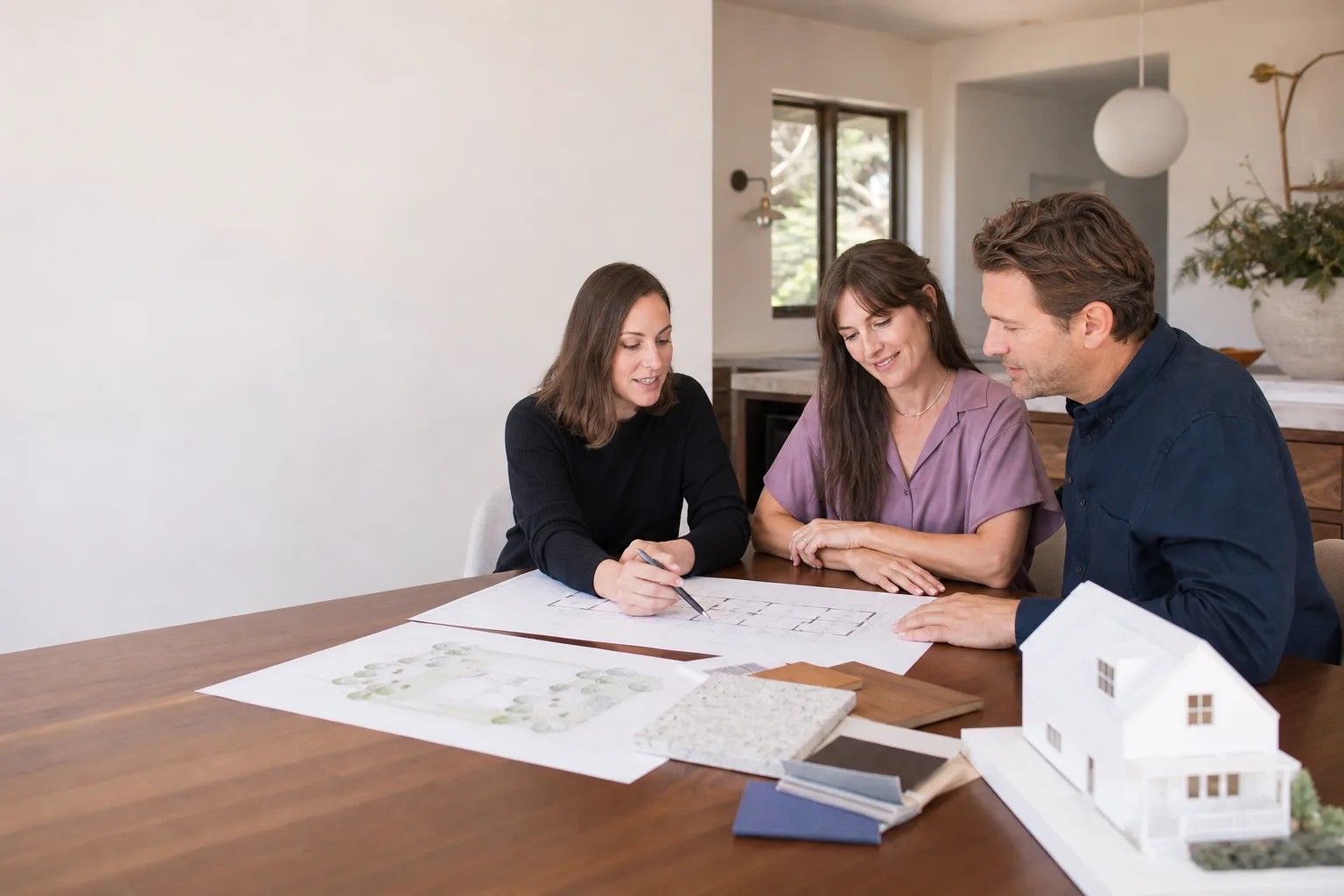
- Intake and completeness review (1 to 3 weeks). You submit plans, structural calcs, Title 24 energy documents, and the permit application. The city reviews for completeness, not correctness. Missing items get kicked back, and each resubmission resets the clock.
- Plan check review (3 to 6 weeks). The plan reviewer examines the drawings for building code, zoning code, and fire code compliance. This is where fire sprinkler triggers, setback violations, and Title 24 conflicts surface. First-round comments typically come back within 3 to 4 weeks, but complex projects or coastal zone properties can take 6 weeks.
- Revisions and resubmission (1 to 2 weeks per round). Your designer or builder addresses the plan check comments and resubmits. Most Ventura ADUs need 1 to 3 revision rounds. Each round adds 1 to 2 weeks.
- Permit issuance (3 to 5 business days after final approval). Once the plans are approved and all fees are paid, the city issues the permit. You pay impact fees, school fees, and any coastal zone permit fees at this point.
- Total realistic timeline: 2 to 4 months from first submission to permit in hand. Prefab ADUs with pre-reviewed plans can trim this to 4 to 6 weeks total, because the manufacturer’s plans have already been through a standard review and the city’s job is mostly site-specific checks.
One Ventura-specific wrinkle: the city’s plan check queue slows during late summer and early fall, when many homeowners file permits for projects they want to start in the dry season. Filing in late winter or early spring typically moves faster.
The Four Inspection Stages Every Ventura ADU Must Pass
Once the permit is issued, the inspection process begins. Ventura requires inspections at four distinct stages for a typical detached ADU. Missing any inspection or failing one without a correction creates delays, and the city’s reinspection fees apply.
Stage 1: Foundation and Setbacks
This inspection happens after the foundation forms are set but before concrete is poured. The inspector verifies the foundation is placed exactly where the approved plans show, setbacks from property lines are correct, and the formwork is structurally sound. Most common failure: the foundation is off by inches from the approved plan, often because the concrete subcontractor didn’t reference the survey correctly. In Ventura’s tighter lots, a 4-inch error can put you over the setback line and require a plan revision.
Stage 2: Rough Framing, Electrical, Plumbing, and Mechanical (MEP)
This is the longest inspection, covering the framed structure, rough electrical wiring, plumbing rough-in, and HVAC rough-in. The inspector checks stud spacing, shear wall nailing patterns, hold-down placement, electrical box placement, plumbing vent sizing, and duct installation. Most common failures in Ventura: missing shear wall nailing on garage conversions (the inspector will check every panel, not just a sample), undersized plumbing vents, and electrical panels that don’t meet current arc-fault and ground-fault requirements. This stage also includes the Title 24 insulation inspection, which must be done by the HERS rater, not the city inspector.
Stage 3: Insulation and Drywall
Before drywall goes up, the HERS rater verifies the insulation installation meets Grade 1 standards: no gaps, no compressions, no voids. The city inspector then checks that all rough-in items are covered and no electrical or plumbing work is hidden behind unapproved enclosures. Most common failure: insulation installed before the HERS rater arrives. If insulation goes in and the rater can’t see behind it, the rater may require removal for verification.
Stage 4: Final Inspection and Certificate of Occupancy
The final inspection covers all finished work: fixtures in place, electrical devices installed, smoke and carbon monoxide detectors operational, doors and windows working, and the exterior finished to match the approved design. The inspector also verifies the water heater is strapped and vented correctly, the HVAC system runs, and the ADU has its own separate address posted. Most common failure: missing carbon monoxide detectors or smoke detectors that don’t communicate between the main house and the ADU where required, and missing exterior address numbers visible from the street. Once the final inspection passes, Ventura issues a certificate of occupancy, and the ADU becomes legal living space.
Each failed inspection in Ventura triggers a reinspection fee of $150 to $300, depending on the trade. A builder who walks each inspection with the inspector and reviews the checklists ahead of time avoids most reinspections.
Owner-Builder Permit Risks in California
California allows homeowners to pull their own permits as an owner-builder, and for an ADU this can save $10,000 to $20,000 in general contractor overhead. But doing so carries three specific risks-detailed in our DIY vs Professional ADU: The Ventura Homeowner’s Decision Guide-that most homeowners don’t understand until it’s too late.
Risk 1: The title transfer restriction. If you pull an owner-builder permit and then sell the property within one year of the permit’s final inspection, California law requires you to disclose the owner-builder status to the buyer. If you sell within 90 days of completion, you’re typically prohibited from selling altogether without jumping through additional hoops. This creates a real problem for homeowners who build an ADU specifically to increase resale value and then get a strong offer sooner than expected.
Risk 2: You become the general contractor, legally. Pulling an owner-builder permit means you are responsible for every subcontractor’s work, every code requirement, every inspection, and every worker’s compensation issue on the job site. If an uninsured subcontractor gets hurt on your property, you are the employer of record. Most homeowners don’t carry workers’ compensation insurance, and a single injury claim can exceed the total savings of the owner-builder route.
Risk 3: Plan check goes slower, not faster. The city reviews owner-builder applications with the same rigor as contractor applications, but owner-builders typically don’t have structural engineers and Title 24 consultants on call. Missing details in the plan set produce multiple rounds of plan check comments, and each round resets the 60-day clock. In our experience, owner-builder ADUs in Ventura average 4 to 6 months to permit issuance, compared to 2 to 4 months for a professional builder with a complete plan set.
The owner-builder route makes sense if you’re a licensed contractor yourself, or if you have deep construction experience and the time to manage the process. For everyone else, the savings usually evaporate in the form of plan check delays, inspection failures, and the title transfer restriction.
How Prefab ADUs Change the Permitting Math
Prefab ADU brands like Dvele, Mighty Buildings, and Boxabl ship factory-built modules that arrive on a truck and get craned into place, typically in one to three weeks of on-site work. The permitting advantage is that these manufacturers have already run their designs through state-level plan review and structural engineering. When you submit a prefab ADU application to Ventura, the city is reviewing site-specific items (setbacks, foundation, utilities, fire access) rather than every structural detail of the building.
In practical terms, prefab plan check in Ventura typically runs 4 to 6 weeks instead of 8 to 10 for a site-built ADU, and first-round plan check comments are typically minor adjustments rather than structural revisions. The modules are built in a factory under controlled conditions, which means the framing, electrical, and plumbing rough-ins are done before the modules ever reach Ventura. The city inspector’s job at the site is to verify the foundation, the connections between modules, and the utility hookups.
The trade-off: prefab ADUs are typically not cheaper than site-built ADUs. A factory-built unit from Dvele or Mighty Buildings typically runs $350 to $500 per square foot for the module itself, before site work, foundation, and utility connections. That’s comparable to a mid-range site-built ADU in Ventura. What you’re buying is speed and predictability, not raw cost savings. Boxabl’s smaller casita units (under 400 sq ft) run at the lower end of that range and avoid the fire sprinkler trigger entirely, which is a meaningful advantage for budget-conscious homeowners.
Benson ADU Ventura builds with Dvele, Mighty Buildings, Boxabl, and Plant Prefab, among other brands. That means homeowners get a real comparison of factory-built options instead of a single take-it-or-leave-it product. Some lots in Ventura simply can’t accommodate a crane, and some design preferences don’t align with modular construction. Having both prefab and site-built options on the table makes the permitting conversation more honest from the start.
Common Mistakes to Avoid
- Assuming “by-right” means “no local requirements.” State law removed zoning barriers, but Ventura still enforces fire code, energy code, and coastal zone rules. A 760-square-foot plan that crosses the sprinkler threshold by 10 square feet costs $8,000 to $14,000 more than needed. Size your plan deliberately.
- Submitting plans without a Title 24 energy report. Ventura’s plan check rejects applications that don’t include the HERS compliance documents. The report costs $500 to $1,000 and takes a week to produce. Get it before you submit, not after the first completeness review.
- Using a designer who doesn’t know Ventura’s plan check preferences. Every plan reviewer has specific things they look for. A designer who works mostly in Los Angeles or Orange County may not account for Ventura’s fire sprinkler triggers, hillside setback rules, or coastal zone overlay requirements. The result is multiple revision rounds and a 60-day clock that keeps resetting.
- Pulling an owner-builder permit without understanding the title restriction. If you might sell within a year of completing the ADU, an owner-builder permit creates a disclosure obligation and potentially blocks a sale. The savings typically don’t justify the restriction.
- Forgetting about utility connection fees in the budget. Ventura Water charges connection fees for new dwelling units, and school impact fees apply to ADUs 750 sq ft and larger. These fees are due at permit issuance, not at the end of construction. Budget for them upfront.
- Scheduling inspections without verifying the previous stage was signed off. If the rough framing inspection hasn’t passed, the insulation inspection can’t happen. If the insulation wasn’t verified by the HERS rater, drywall can’t go up. Each out-of-sequence inspection wastes a city inspector’s time and triggers a reinspection fee.
- Choosing a prefab ADU without checking crane access. Factory-built modules from Dvele and Mighty Buildings arrive on flatbed trucks and require a crane for placement. A narrow alley, mature trees, or overhead power lines can turn a one-day placement into a multi-day logistical problem. Confirm crane access before committing to a prefab design.
When to Call a Professional
If your property is in a coastal zone overlay, if your planned ADU exceeds 750 square feet, or if you’re converting a garage that has structural issues, call a professional before you spend money on plans. These three scenarios each carry code triggers that aren’t obvious from the state law summaries, and fixing them after plan check starts costs more than getting them right from the first submission. A builder who knows Ventura’s plan check process can flag the fire sprinkler trigger, the coastal permit requirement, or the structural reinforcement need before you pay for a plan set that gets rejected. Benson ADU Ventura offers free estimates in Ventura, and every project includes a written price before any work starts. Call (350) 207-2506 to schedule yours.
Frequently Asked Questions
Expect 2 to 4 months from application submission to permit issuance for a site-built ADU in Ventura. The city’s current plan check queue runs 6 to 10 weeks for a complete application, plus 1 to 3 weeks for the completeness review and 1 to 2 weeks per revision round. Prefab ADUs with pre-reviewed plans typically move faster, often 4 to 6 weeks total. Call (350) 207-2506 to get a realistic timeline for your specific property.
ADUs over 750 square feet in Ventura require automatic fire sprinklers, adding $8,000 to $14,000 to the project cost. ADUs under 750 square feet are exempt when the primary dwelling also lacks sprinklers. This is the most common budget surprise in Ventura ADU projects, and it’s triggered by square footage alone. Call (350) 207-2506 to review your plan size before you commit.
Yes, but you’ll need a coastal development permit in addition to the standard building permit. The coastal zone covers much of downtown Ventura, the Avenue district, and the hillside areas above Ventura College. The coastal permit adds $3,000 to $7,000 in fees and a separate review track that can extend the timeline by 4 to 8 weeks. Call (350) 207-2506 to find out if your property falls within the coastal zone boundary.
Title 24 compliance for a typical Ventura ADU costs $800 to $1,500 for the HERS rater’s verification, plus the incremental cost of energy-efficient windows, insulation, and HVAC equipment. In the Ventura climate, a ductless mini-split system is usually the most cost-effective way to meet the code. The HERS verification is mandatory and happens before drywall installation.
Yes, California allows owner-builder permits, but you assume legal responsibility for every subcontractor, every code requirement, and every workers’ compensation issue on the job site. If you sell the property within one year of the final inspection, you must disclose owner-builder status to the buyer, and selling within 90 days is typically restricted. The savings rarely justify the liability for most homeowners.
Expect $8,000 to $12,000 for Ventura building permit and plan check fees on a typical 800-square-foot ADU, plus $4,000 to $6,000 in water and sewer connection fees, plus school impact fees (exempt under 750 sq ft) and any coastal zone permit fees if applicable. The permit fees are due at issuance, not at the end of construction. Call (350) 207-2506 for a full line-item breakdown for your specific project.
The Bottom Line
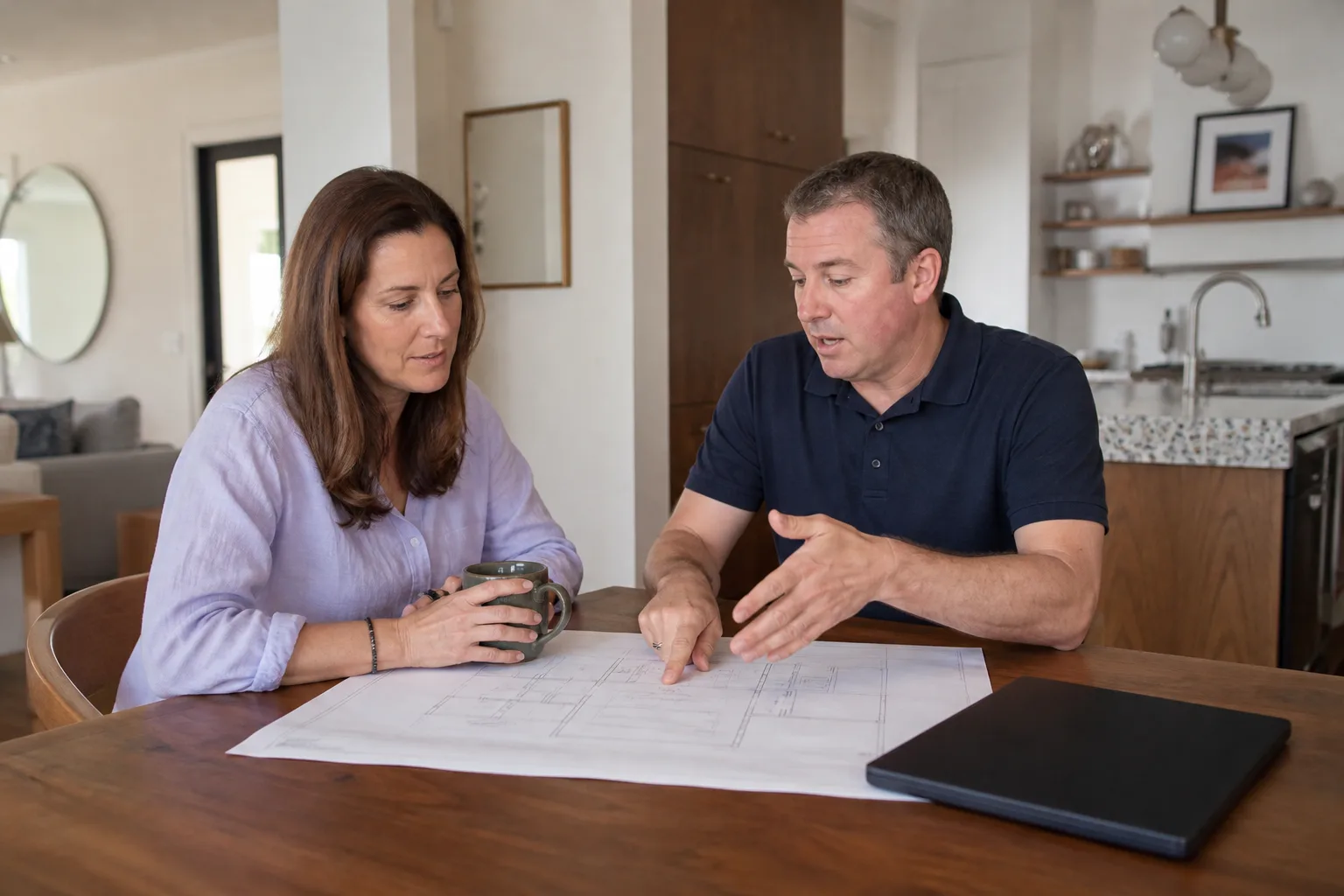
California’s ADU reforms removed most of the old zoning barriers, but Ventura still has real checkpoints that cost money and time: fire sprinklers above 750 square feet, Title 24 HERS verification, coastal zone permits for much of the city, and a plan check queue that runs longer than the statutory 60 days in practice. The homeowners who move fastest are the ones who know these triggers before they file, size their plans deliberately, and submit complete, code-ready plan sets on the first try; for ongoing help, bookmark our more guides & resources. The homeowners who move slowest are the ones who discover the sprinkler trigger or the coastal permit after plan check starts. The difference between those two outcomes is usually a builder who has been through the process enough times to know where the hidden costs hide.
Written by Troy Eastman, Owner at Benson ADU Ventura, serving Ventura since 2006.